

 See My Latest Article on HelloNation
Modern home lighting works best when it combines several types of illumination rather than relying on a single bright ceiling fixture. Ambient, task, accent, and natural light each serve a different purpose, and a balanced plan can make rooms feel more comfortable, functional, and adaptable.
For homeowners in Grand Rapids, MI, lighting decisions also need to account for shorter winter daylight, cloudy conditions, older housing layouts, and the way seasonal darkness affects daily routines. The most effective solution is rarely the brightest possible fixture. It is a coordinated system that provides the right amount of light in the right place.
What are the main types of lighting used in a modern home?
The four basic lighting layers are ambient, task, accent, and decorative lighting. A comfortable room usually includes at least two of these layers, while busy spaces such as kitchens and bathrooms often benefit from all four.
- Ambient lighting provides general illumination. Recessed fixtures, ceiling-mounted lights, flush mounts, and well-placed wall fixtures commonly serve this role.
- Task lighting makes specific activities easier and safer. Examples include under-cabinet lights, reading lamps, vanity fixtures, and focused lighting over work surfaces.
- Accent lighting draws attention to architectural features, artwork, shelving, fireplaces, or textured walls.
- Decorative lighting contributes visual character through pendants, chandeliers, sconces, and other fixtures that are designed to be seen.
A common mistake is asking one ceiling fixture to perform every job. That often creates a room that is technically bright but still has shadows, glare, or an uncomfortable atmosphere.
How should lighting be planned in an open-concept layout?
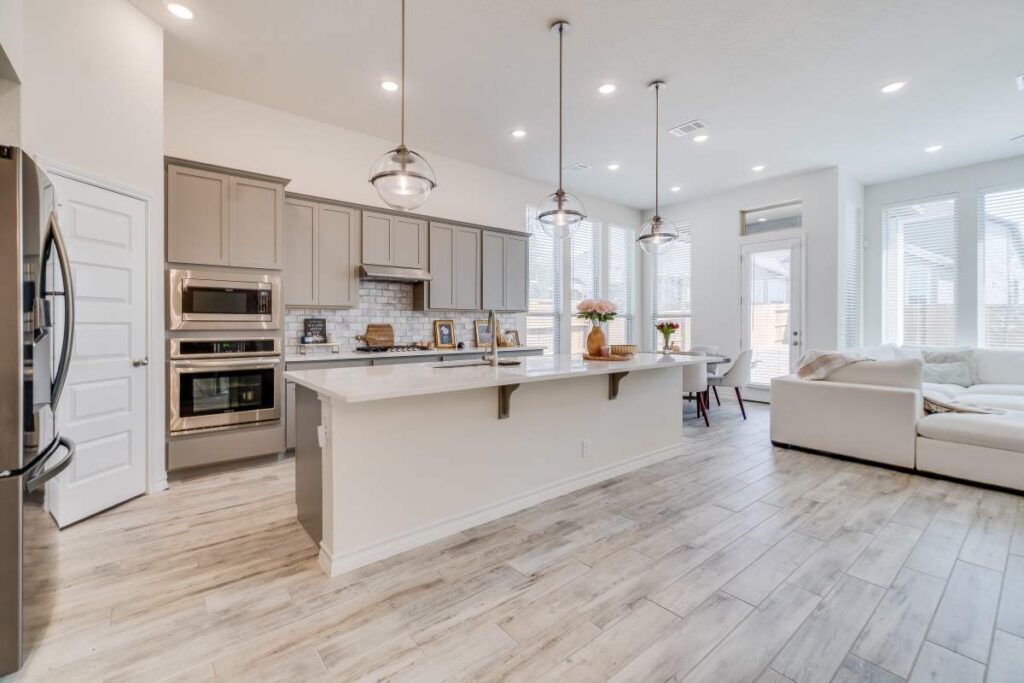
Open-concept rooms need separate lighting zones, even when the kitchen, dining area, and living space share one large room. Each zone should have its own fixtures and controls so the lighting can respond to different activities.
For example, a kitchen may use recessed or surface-mounted ambient lighting, task lighting beneath upper cabinets, and pendants over an island. The dining area may need a dimmable fixture centered over the table, while the living area can use floor lamps, wall fixtures, or ceiling lighting controlled independently.
Using separate switches or dimmers prevents the entire space from being equally bright at all times. It also helps reduce glare from reflective countertops, television screens, windows, and polished flooring.
Fixture placement should follow the room’s actual use rather than a perfectly symmetrical ceiling grid. A light centered in the ceiling may not adequately illuminate a countertop, reading chair, or dining table positioned several feet away.
What lighting is most useful in kitchens?
Kitchen lighting should make food preparation, cleaning, storage, and circulation easier. General ceiling lighting is necessary, but it should not be the only source.
Under-cabinet lighting is especially useful because it places light directly on countertops instead of behind the person using them. Continuous or closely spaced fixtures generally reduce dark gaps better than isolated lights. The light source should be positioned toward the front portion of the cabinet so it reaches the work surface without shining directly into the eyes.
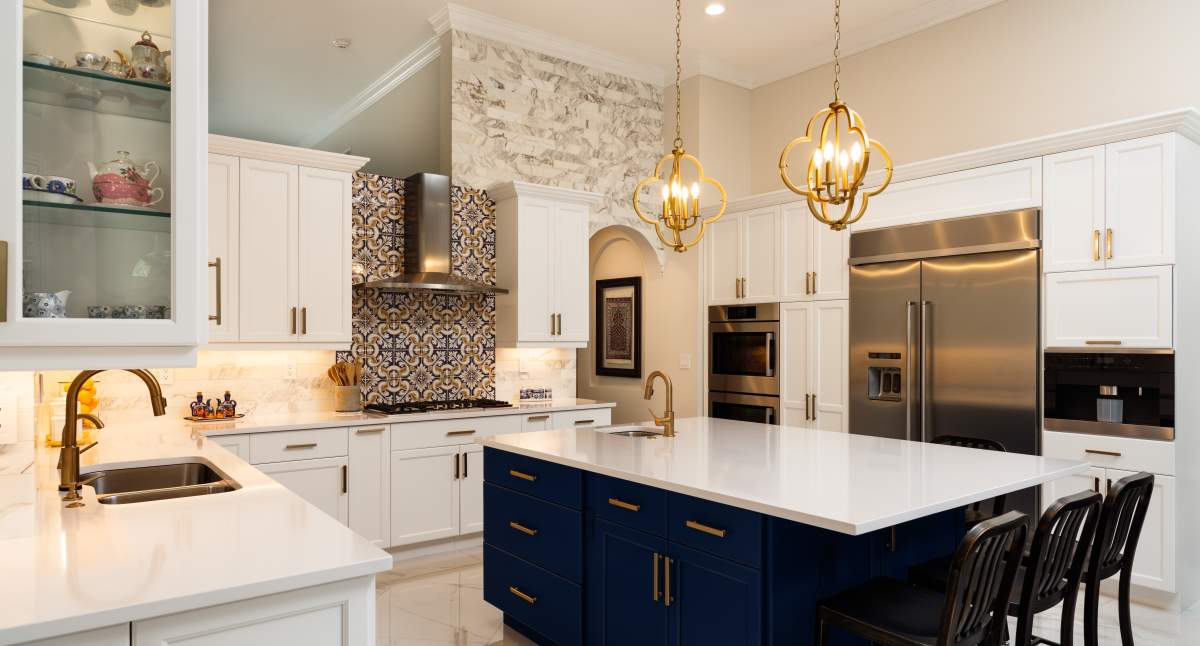
Pendant fixtures can provide both task and decorative lighting over an island or peninsula. Their size and spacing should match the counter rather than overwhelm the room. Recessed fixtures should be positioned to illuminate work areas, not simply spread evenly across the ceiling.
In homes with older electrical layouts, adding new kitchen lighting may require careful planning around existing wiring, cabinet construction, ceiling access, and circuit capacity. Electrical work that involves new wiring, altered junction boxes, or changes to the service should follow applicable safety requirements.
Which color temperature works best indoors?
Color temperature describes whether light appears warm, neutral, or cool. Warm light tends to feel softer and more residential, while cooler light can appear crisper and more energetic.
A practical approach is to use:
- Warm or warm-neutral light in bedrooms, living rooms, dining areas, and other relaxing spaces.
- Neutral light in kitchens, laundry rooms, home offices, and bathrooms where visual accuracy matters.
- Consistent color temperature within connected spaces to avoid a patchwork appearance.
The exact appearance also depends on wall color, flooring, cabinetry, window light, and the fixture’s shade. A light that looks comfortable in a showroom may appear different in a room with gray paint or dark wood.
Color rendering matters as well. Higher color-rendering performance helps paint, food, clothing, skin tones, and wood finishes appear closer to their natural colors. This is particularly helpful in kitchens, bathrooms, closets, and rooms used for crafts or detailed work.
Are recessed lights always the best choice?
Recessed lighting can provide a clean appearance, but it is not automatically the best option for every room. Too many recessed fixtures may create glare, harsh shadows, or a ceiling that feels visually crowded.
Surface-mounted fixtures, flush mounts, wall sconces, pendants, and track-style systems can be more appropriate in rooms with limited ceiling access, shallow framing, distinctive architecture, or low ceilings. Decorative fixtures may also provide more visual interest than a ceiling filled with small downlights.
In older homes, recessed lighting may require cutting into finished ceilings, navigating structural framing, or addressing insulation and air-sealing concerns. Fixtures installed near insulated areas must be properly rated and installed to reduce heat and air-leakage problems.
A useful design principle is to place light where it is needed instead of automatically spacing identical fixtures throughout the room.
How can lighting improve comfort during Grand Rapids winters?
Seasonal darkness can make interior lighting feel more significant during morning routines, work hours, and early evenings. A layered plan helps a home remain usable without creating excessive brightness.
Daylight should be preserved where possible by keeping windows clear, using adjustable shades, and avoiding furniture that blocks the lower portion of a window. Supplemental lighting can then support areas that remain dim during overcast weather.
Entryways and stairways deserve special attention during darker months. Even illumination, low glare, and clearly visible changes in floor level can improve everyday safety. Motion-sensitive lighting may be useful in storage areas, mudrooms, and exterior approaches, provided the controls do not create sudden glare.
Basements also benefit from several light sources instead of a single central fixture. Wall-mounted fixtures, lamps, and evenly distributed ceiling lighting can make lower-level rooms feel less enclosed.
What should be considered in bathrooms and bedrooms?
Bathroom lighting should combine general illumination with accurate, shadow-reducing light near the mirror. Fixtures placed on both sides of a mirror or across its upper portion generally provide more even facial lighting than a single fixture directly above the head.
Wet and damp locations require fixtures rated for the conditions in which they are installed. Placement near showers, tubs, and sinks should be planned with safety and moisture exposure in mind.
Bedrooms usually benefit from softer ambient lighting, bedside task lights, and independently controlled fixtures. A reading light should be aimed at the book or device rather than directly toward the sleeper’s eyes. Dimmers are especially useful because bedroom lighting often needs to shift from morning preparation to evening relaxation.
How do dimmers and controls improve a lighting plan?
Dimmers allow one fixture to serve different purposes throughout the day. Bright settings can support cleaning or detailed tasks, while lower settings can create a calmer environment in the evening.
Separate controls are most useful when they divide a room into functional zones. Kitchen work lighting, island pendants, dining fixtures, and living-area lighting should not always operate together.
Smart controls can add scheduling, occupancy sensing, and remote adjustment, but they are not required for a well-designed system. Simple wall controls are often easier for visitors, children, and older residents to use. Any control system should remain practical if a wireless connection or automated feature stops working.
The strongest lighting plan is one that supports real household habits: cooking, reading, relaxing, cleaning, entering the home after dark, and moving safely between rooms. A combination of thoughtful fixture placement, appropriate color quality, separate controls, and seasonal awareness usually matters more than choosing the newest style.